After a hail storm or severe wind event, the first question most Central Texas homeowners ask is: “Will my insurance cover this?” It’s the right question. The answer is almost always: “It depends on your policy.”
This post is educational. Every policy is different, and nothing here constitutes insurance advice. What we can do is explain how Texas homeowners policies typically work when it comes to roofing claims, so you understand what you’re looking at.
The Basic Coverage Framework
Standard Texas homeowners insurance policies cover sudden, accidental damage caused by specific events. Wind and hail are typically covered perils. That means if a hail storm causes physical damage to your roof, your policy generally provides coverage for repair or replacement — subject to your deductible and the specific terms of your policy.
What’s typically not covered: damage from normal wear and aging, improper maintenance, or pre-existing conditions. An old roof that was already near the end of its life before a storm is a more complicated claim than a newer roof with clearly documented storm damage.
ACV vs. RCV: One of the Most Important Distinctions in Your Policy
Read your policy carefully for these two terms:
ACV — Actual Cash Value. The insurer pays you the current depreciated value of the roof. A 15-year-old asphalt shingle roof that would cost $12,000 to replace new might be valued at $5,000 to $6,000 after depreciation. You’d receive that amount minus your deductible. The gap between that check and the actual replacement cost comes out of your pocket.
RCV — Replacement Cost Value. The insurer pays the cost to replace the roof with a comparable new one, minus your deductible. This is generally the better coverage for homeowners. An RCV policy typically pays in two stages: an initial payment based on ACV, and a second “recoverable depreciation” payment once the work is completed and documented.
If you’re not sure which type of coverage you have, look at your declarations page or call your agent. It’s worth knowing before a storm happens, not after.
Deductibles in Texas
Texas insurance policies often have separate wind and hail deductibles, which can be higher than your standard policy deductible. These are sometimes written as a percentage of your home’s insured value rather than a flat dollar amount. A 2% wind/hail deductible on a $300,000 home means $6,000 out of pocket before insurance pays anything.
High deductibles are especially common on newer policies in Texas. After significant storm seasons in recent years, insurers have adjusted their terms. Check your policy to understand exactly what your deductible is for wind and hail losses.
Age and Condition of the Roof
Some insurance policies in Texas include roof age schedules — they pay a decreasing percentage of replacement cost as the roof gets older. A policy might pay 100% RCV for a roof under 10 years old, but shift to ACV for roofs 15 years or older. The specific terms vary by insurer and policy.
This is another reason regular roof maintenance and inspections matter. A documented record of proper maintenance can sometimes strengthen a claim. A roof that was obviously neglected gives an adjuster more to work with when looking for reasons to limit the payout.
What the Claims Process Generally Looks Like
After a storm event:
- You report the damage to your insurer and file a claim.
- An insurance adjuster inspects the roof to assess the damage.
- The adjuster prepares a scope of loss document describing what they found and what they believe should be covered.
- You receive a claim decision and an initial payment (if approved).
- A contractor performs the work and provides documentation.
- If you have RCV coverage, you submit for the recoverable depreciation after completion.
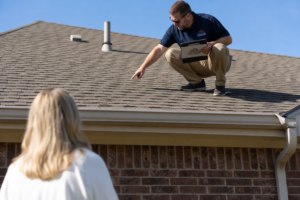
Having an independent inspection from a certified roofing contractor before or alongside the adjuster visit gives you documentation to support your claim. If the adjuster misses damage that your contractor found, you have a basis to dispute the scope.
What Divided Sky Does (and Doesn’t Do) on Insurance Claims
We help homeowners understand what we found during our inspection. We document damage with photos and written assessments. We provide detailed estimates that can be shared with your insurer. We’ve worked alongside hundreds of insurance claims across Central Texas and understand how to communicate with adjusters clearly.
We do not guarantee claim outcomes. We do not make promises about what your insurer will or won’t cover. Insurance decisions are made by insurance companies. What we can do is make sure you have accurate documentation of what’s actually on your roof.
If you’ve had recent storm activity in San Marcos, Kyle, New Braunfels, or anywhere in Central Texas, schedule a free inspection and we’ll tell you honestly what we find.
