There’s no such thing as a universal “best roof.” But there is a best roof for your climate, your budget, and your home. In Central Texas, that calculation starts with heat.
San Marcos averages over 100 days per year above 90 degrees. Attic temperatures regularly hit 150 to 160 degrees in the summer. UV radiation here is relentless. The roof that works perfectly in Seattle or Denver is not necessarily the roof that makes sense for a home in Buda or Wimberley.
Here’s how the three most common roofing materials hold up in Central Texas conditions.
Asphalt Shingles: The Workhorse with a Weakness
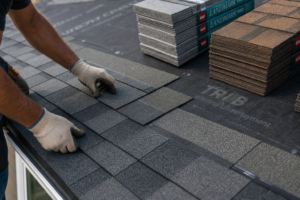
Asphalt shingles cover the majority of homes in Central Texas. They’re affordable, widely available, and come in a range of styles that work for most homes. Standard three-tab shingles have largely given way to architectural (dimensional) shingles, which have better wind resistance and a more layered appearance.
The heat challenge: asphalt is petroleum-based. Prolonged UV exposure degrades the binders that hold the shingles together. Thermal cycling — heating and cooling every day — causes shingles to expand and contract, eventually leading to cracking and curling. This is one reason asphalt roofs in Texas often reach the end of their useful life closer to the 20-year mark rather than the 30-year mark on the warranty.
The solution for heat performance: lighter-colored shingles reflect more solar energy than dark ones. Impact-resistant Class IV shingles are a step up in durability. And proper attic ventilation is non-negotiable — without it, heat builds up beneath the roof deck and shortens the life of even a quality asphalt installation.
Metal Roofing: Built for Texas
Metal roofs perform well in heat because they’re fundamentally better at handling thermal stress. Steel and aluminum expand and contract, but metal roofing systems are designed with that movement in mind. Standing seam panels, for example, float on clips that allow the metal to move without cracking or popping fasteners.
Reflectivity is the big advantage. A light-colored or coated metal roof can reflect 60 to 70 percent of solar radiation, compared to maybe 25 to 35 percent for a standard asphalt shingle. That means less heat absorbed, lower attic temperatures, and reduced cooling costs. Some homeowners in Dripping Springs and the Hill Country area report measurable drops in summer electricity bills after switching to metal.
Metal also handles hail better than asphalt in most cases. A Class IV impact-rated metal panel is about as tough as a roofing material gets. In a region where hail events are a regular spring occurrence, that matters.
The honest tradeoff: metal costs more upfront. You’ll typically pay two to three times what an asphalt replacement would cost. Over a 50-year lifespan, the math can work in metal’s favor. But if the upfront number doesn’t fit your situation, metal isn’t the only good answer.
Tile: Excellent Performance, Specific Structural Requirements
Clay and concrete tile roofs are common on higher-end homes throughout Central Texas, especially in New Braunfels, Wimberley, and the Hill Country. They perform beautifully in heat: the tiles themselves are dense and slow to absorb heat, and the airspace beneath each tile acts as natural insulation.
Tile roofs also hold up well against UV exposure — ceramic glazes and concrete treatments resist degradation better than asphalt binders. A properly installed tile roof in Central Texas can last 50 years or more.
The structural consideration is real: tile is heavy. Clay tile can weigh three to five times more than asphalt shingles per square. If your home wasn’t built with a tile roof in mind, the structure beneath may need reinforcement before a tile installation makes sense. This is a conversation to have with a qualified roofing contractor before making a decision.
Energy Efficiency: What Actually Moves the Needle
If your goal is lower cooling bills, roofing material is one piece of the puzzle. Attic insulation and ventilation have a comparable or greater impact on summer energy costs in Central Texas. A metal roof over a poorly insulated, poorly ventilated attic will underperform a well-insulated asphalt roof.
The full picture includes:
- Roof material and color (reflectivity)
- Attic ventilation (ridge vents, soffit vents, or solar-powered attic fans)
- Attic insulation (R-38 or higher is generally recommended for Central Texas)
- Radiant barriers in the attic (a relatively low-cost addition with real impact)
Divided Sky handles all of these. We’re not just a roofing company — we look at the whole system, because the whole system determines how your home handles Texas summers.
The Right Answer for Your Home
There isn’t one universal answer here. What’s right depends on your home’s age and structure, your budget, how long you plan to stay, and what condition your current roof is in. What we can tell you is that all three major material categories have solid options for Central Texas heat — and the installation quality matters as much as the material itself.
Divided Sky is a GAF Master Elite Contractor, a designation earned by fewer than 3% of roofing contractors in North America. That certification matters when it comes to both the quality of the installation and the warranty coverage available to you. Contact us for a free consultation on what makes the most sense for your home.
