If you’re replacing a roof in Central Texas, there’s a good chance you’ll end up weighing two options: asphalt shingles or metal roofing. Both are legitimate choices. Both have real strengths. The right answer depends on your priorities, your timeline, and your budget.
Here’s an honest comparison — not a sales pitch for either side.
Upfront Cost
Asphalt wins on initial cost, and it’s not close. A typical residential asphalt shingle replacement in Central Texas runs roughly $8,000 to $15,000 depending on roof size, pitch, and shingle grade. A comparable metal roof installation usually falls in the $18,000 to $35,000 range for standing seam, or somewhat less for metal shingles.
That gap matters for a lot of homeowners. If your budget is the primary constraint right now, asphalt is a reasonable and time-tested choice. If you have flexibility and are thinking long-term, metal starts making more financial sense when you look past the first invoice.
Lifespan
A quality architectural asphalt shingle roof in Texas typically lasts 20 to 25 years. Some reach 30. In areas with heavy UV exposure and summer heat — which describes most of Central Texas — the lower end of that range is more realistic.
A metal roof, properly installed, lasts 40 to 70 years. Some standing seam installations on commercial buildings have gone longer. For most homeowners, a metal roof is likely the last roof they’ll ever put on their house.
Run the numbers: two asphalt roofs over 50 years versus one metal roof over 50 years. The lifetime cost gap narrows considerably. For homeowners who plan to stay put, metal often wins on total cost of ownership even when the upfront number is higher.
Heat and Energy Performance
This is where Texas climate makes a real difference in the comparison. Metal roofing reflects significantly more solar radiation than asphalt. A light-colored or reflective-coated metal roof can reflect 60 to 70 percent of incoming solar energy. Standard asphalt shingles in dark colors absorb most of that heat instead.
Lower solar absorption means lower attic temperatures and reduced air conditioning load. In San Marcos, Kyle, or Buda, that can translate to a meaningful reduction in summer electricity bills — especially when combined with proper attic ventilation and insulation.
Asphalt has improved here too. “Cool roof” shingles use reflective granules to reduce solar heat gain, and they’ve become more common in Texas. They’re not as reflective as metal, but they’re a step forward from traditional asphalt.
Hail Performance
Central Texas gets hail. Significant hail events roll through the San Marcos area, New Braunfels, and Kyle on a regular basis during spring storm season. How your roof handles hail matters.
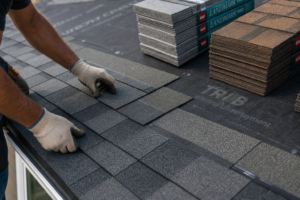
Asphalt shingles absorb hail impact and can suffer bruising, cracking, or granule loss depending on the size of the stones and the quality of the shingle. Class IV impact-resistant asphalt shingles are considerably more durable than standard grades and often qualify for insurance discounts in Texas.
Metal roofing, particularly Class IV rated panels, handles hail better in most cases. Metal dents before it breaks. A quality metal roof that’s been dinged by hail can often continue performing without leaking. Cosmetic denting versus functional damage is an important distinction — and it’s one your adjuster will likely look at.
Noise
Some homeowners worry that metal roofs are loud in the rain. On most residential installations, this isn’t the reality. Metal roof systems installed over existing decking or solid sheathing are no louder than asphalt. You may notice rain on the roof — some people actually like that — but the drum-on-a-tin-roof scenario typically applies to older installations over open framing, not modern residential metal roofing.
Appearance and HOA Considerations
Asphalt shingles are the default look for most neighborhoods, and they blend in. If you’re in a neighborhood with strict HOA guidelines or one that has a specific architectural character, asphalt is almost always an approved option. Metal roofing can be beautiful and modern, but some HOAs have restrictions. Check before you commit.
Standing seam metal has a clean, contemporary look that works especially well on certain architectural styles. Metal shingles can approximate the look of traditional roofing materials while delivering metal’s performance benefits.
How to Choose
Ask yourself these questions:
- How long do I plan to stay in this home? (Longer timeline favors metal.)
- What’s my upfront budget? (Tighter budgets favor asphalt.)
- Is energy efficiency a priority? (Metal wins here for most Texas homes.)
- How important is minimizing future maintenance? (Metal requires less long-term attention.)
- Does my HOA have restrictions? (Check before choosing metal.)
There’s no wrong answer between these two materials when the installation is done right. What makes the bigger difference than material choice is having a contractor who installs correctly, stands behind their work, and uses quality products.
Divided Sky is a GAF Master Elite Contractor — that’s the highest level of certification GAF offers, held by fewer than 3% of roofing contractors in North America. We install both asphalt and metal roofing throughout San Marcos, Kyle, Buda, New Braunfels, and the surrounding area. Schedule a free consultation and we’ll walk you through what makes sense for your home.
