Most homeowners don’t think much about roof ventilation. It’s not something you see from the street. It doesn’t come up in conversations until something goes wrong. But in Central Texas, poor ventilation is one of the leading causes of premature roof failure — and it’s a completely preventable problem.
What Roof Ventilation Actually Does
Your attic needs to breathe. Roof ventilation creates a continuous flow of outside air through the attic space, entering through soffit vents along the eaves and exiting through ridge vents at the peak. This airflow does two important things:
In summer: It exhausts the superheated air that builds up in the attic. Without adequate ventilation, attic temperatures in Central Texas can reach 150 to 160 degrees on a hot August afternoon. That heat bakes the shingles from underneath, accelerates the breakdown of asphalt binders, and degrades the roof deck. It also radiates into the living space below, forcing your air conditioner to work harder and running up your electricity bill.
In winter: It prevents moisture from accumulating in the attic. Warm, humid air from the living space rises into the attic. Without ventilation, that moisture condenses on cold surfaces, leading to mold growth, insulation damage, and rot in the roof deck. Texas winters are mild, but this dynamic still occurs — especially during the few weeks of colder temperatures each year.
The Two Components of Proper Ventilation
Ventilation is a system, not a single vent. Proper function requires both intake and exhaust working together.
Intake vents are typically located in the soffits — the underside of the roof overhang. They draw cooler outside air into the attic at the low point of the system.
Exhaust vents sit near or at the ridge — the peak of the roof. Heated air naturally rises and exits through these vents. Ridge vents that run continuously along the peak are generally more effective than individual static vents placed at intervals.
When these two are properly balanced, you get consistent airflow through the attic throughout the day. When one is missing or inadequate, the system doesn’t work — either because there’s no intake to replace the exhausted air, or no exhaust to remove the heat that builds up.
Signs of Inadequate Ventilation
- Shingles aging faster than expected. If a 15-year roof looks like a 20-year roof, heat damage from below is often part of the explanation.
- High attic temperatures in summer. On a hot day, if your attic feels like a furnace even with the AC running, ventilation is likely inadequate.
- Higher-than-expected cooling bills. A poorly ventilated attic significantly increases the heat load on your home’s cooling system.
- Moisture staining or mold in the attic. Condensation from inadequate winter ventilation leaves telltale marks on rafters and decking.
- Blistering or buckling shingles. Extreme heat buildup beneath the deck can push shingles to blister and buckle from below.
Ventilation Options for Central Texas Homes
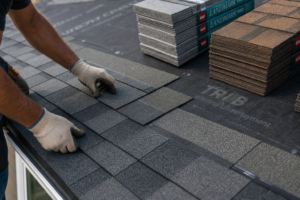
Ridge vents with soffit vents are the most effective and most common approach in residential construction. When installed correctly — with an unobstructed path from soffit to ridge — this passive system works around the clock without power or maintenance.
Power attic ventilators use an electric or solar-powered fan to actively exhaust hot air from the attic. These can boost ventilation in attics that are challenging to ventilate passively due to the home’s design. Solar-powered units eliminate the ongoing electricity cost.
Attic Breeze solar-powered attic fans are a product Divided Sky installs regularly. They’re high-quality, effective, and eliminate the operational cost of conventional electric attic fans. For homes where passive ventilation isn’t sufficient on its own, they’re an excellent solution.
Ventilation and New Roof Installations
When Divided Sky installs a new roof, we evaluate the attic’s current ventilation as part of the project. Installing new shingles over a poorly ventilated attic is a waste of a good shingle — the heat and moisture conditions will shorten the new roof’s life just as they shortened the old one’s. Addressing ventilation at the same time as a roof replacement is the right approach.
GAF’s roofing system approach — part of what makes GAF Master Elite installations distinct — treats the shingles, underlayment, and ventilation as a connected system. We install them that way.
If your home is in San Marcos, Kyle, Buda, Wimberley, or anywhere in Central Texas and you’re concerned about attic ventilation, contact Divided Sky for an assessment.
