You’ve filed a roof damage claim. Now an insurance adjuster is coming out to inspect. Here’s what to expect — and what to watch for.
Who Is the Adjuster?
Insurance adjusters are hired by your insurance company to assess the damage and determine the value of your claim. That doesn’t mean they’re working against you — but it does mean their job is to accurately document covered damage according to your policy. Knowing the difference between covered damage (storm events) and non-covered damage (wear and tear, maintenance neglect) is their expertise.
There are two types: staff adjusters employed directly by your carrier, and independent adjusters hired on contract, often during high-volume storm events when carriers need more capacity. Both follow your policy, but experience levels and familiarity with Texas-specific conditions can vary.
What They’re Looking For
A typical insurance inspection covers:
- Hail impact marks: Circular bruise patterns in shingles, granule loss at impact points, dents in soft metals (vents, flashing, gutters, downspouts)
- Wind damage: Lifted, creased, or missing shingles, particularly along ridges and edges
- Storm-related debris damage: Punctures, tears, or impact damage consistent with the storm event
- Age and condition baseline: Pre-existing wear that isn’t storm-related — this affects the claim value calculation in policies with Actual Cash Value (ACV) provisions
Having Your Own Contractor Present
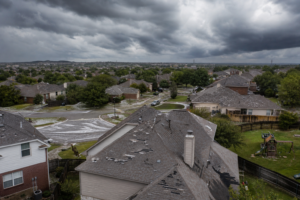
You’re entitled to have your roofing contractor present during the adjuster inspection. This matters. An experienced roofer knows what damage looks like, knows where to look (vents, cap shingles, flashing, fascia), and can point out items the adjuster might miss. A contractor who regularly works with insurance claims knows the documentation language that adjusters use — and can help ensure nothing is overlooked.
Request to schedule the inspection at a time when your contractor can be there. A reputable contractor won’t have a problem making that happen.
After the Inspection
The adjuster submits a report and your carrier issues a claim decision. If the claim is approved, you’ll receive an Explanation of Benefits (EOB) detailing the covered scope of work and the payment calculation. Review it carefully — or have your contractor review it — to ensure the scope matches what was actually found during inspection.
If you believe damage was missed or undervalued, you have options: request a re-inspection, submit supplemental documentation, or in some cases work with a public adjuster. This process varies by carrier and policy.
Divided Sky’s Role
We work with homeowners through the insurance process regularly. We can be present at your adjuster inspection, review your claim EOB, and ensure the scope of covered work is accurate. We don’t make decisions for your carrier — but we make sure the damage is fully documented from our end.
📞 (512) 995-7663 | 🌐 stg-dividedskyroofingandsolar-staging.kinsta.cloud
