Texas cooling bills are high. There are a lot of factors involved, but one of the most common and fixable contributors is inadequate attic insulation. Many Central Texas homes — particularly those built more than 15 years ago — don’t have enough insulation to handle the demands of a modern Texas summer efficiently.
Here’s what you need to know about roof insulation, why it matters, and how to tell if your home needs more.
What Roof Insulation Actually Does
Attic insulation sits between your living space and the attic above. Its job is to slow the transfer of heat — blocking summer heat from moving down into your home’s ceilings and preventing conditioned indoor air from escaping upward in winter.
In Texas, the summer direction is the critical one. An attic sitting at 150 degrees with inadequate insulation below it is essentially a large heating element placed directly over your living space. Your air conditioner has to compensate for that constant heat transfer, which is why homes with poor attic insulation often run their AC continuously on hot days and still can’t get comfortable.
Understanding R-Value

R-value measures a material’s resistance to heat transfer. Higher R-value means better insulation performance.
The U.S. Department of Energy recommends R-38 to R-60 for attic insulation in the Central Texas climate zone (Zone 3). That’s significantly higher than what was considered adequate even 20 years ago. Code has evolved as energy efficiency standards have improved.
Many older Texas homes have attic insulation in the R-11 to R-22 range. That was the standard at the time they were built. By today’s recommendations, it’s substantially less than what’s needed for efficient operation in Texas heat.
Types of Attic Insulation
Blown-in fiberglass or cellulose is the most common type for attic floors. It’s installed loose and settles between and over the attic joists. It’s effective, relatively affordable, and can be added on top of existing insulation to bring the total R-value up to current recommendations.
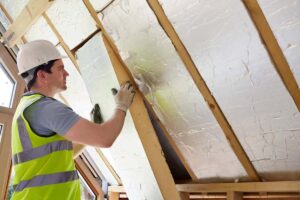
Batt insulation comes in pre-cut rolls and fits between joists. It’s often what you find in older homes. Batts can compress or develop gaps over time, which reduces their effective R-value.
Spray foam insulation is applied to the underside of the roof deck rather than the attic floor. This creates a “conditioned attic” — the attic space itself becomes part of the thermal envelope rather than a buffer zone. It’s more expensive than blown-in but eliminates the need to insulate the attic floor and can significantly improve energy performance in the right situations.
Signs Your Home May Not Have Enough Insulation
- Rooms directly below the attic are noticeably warmer. The second floor or rooms under a cathedral ceiling feel like a different climate than the rest of the house in summer.
- Your AC runs almost constantly on hot days. Your system may be sized correctly, but inadequate insulation means it’s working against a constant heat load it can’t overcome.
- High summer electric bills compared to similar-sized homes. Insulation deficiency shows up on the electricity bill over time.
- You can see the tops of the attic floor joists. If you look in your attic and see the framing above the insulation level, you likely don’t have enough. In a well-insulated attic, the joists should be buried under insulation.
- The home was built before 1990. Older construction often used insulation levels that are below current standards for Central Texas.
Insulation and Roof Condition Work Together
Insulation and ventilation are a team. A well-insulated attic with poor ventilation still traps moisture and lets heat build up against the roof deck. Adequate ventilation with poor insulation means you’re cooling the attic efficiently but still letting that heat radiate into the living space.
When Divided Sky evaluates a roof, we look at the attic’s ventilation and insulation as part of the system. If your roof replacement is imminent, addressing insulation at the same time makes sense — you’re already in the attic space and the disruption cost of doing both together is lower than two separate projects.
Getting an Honest Look at What You Have

The only way to know what you’re working with is to get in the attic and look. Divided Sky’s inspectors check attic conditions including insulation as part of our roof inspection process. We’ll tell you what we find and whether the current setup is adequate for Central Texas conditions.
If you’re in San Marcos, Kyle, Buda, Dripping Springs, Wimberley, or the surrounding area, schedule a free roof and attic inspection here.
