A hail storm or severe wind event changes the repair-versus-replacement conversation in a specific way. Now you’re not just weighing the cost of the work against the roof’s remaining useful life. You’re also navigating an insurance claim, an adjuster’s assessment, and the question of whether your roof’s age and condition affect what coverage you’re entitled to.
Here’s how to think through this decision clearly.
What the Insurance Adjuster Is Looking At
When an insurance adjuster evaluates your storm-damaged roof, they’re making two primary determinations:
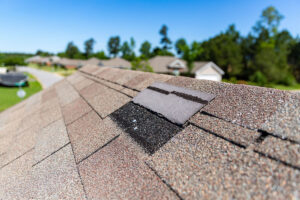
Is the damage from a covered event? For most Texas homeowners policies, wind and hail are covered perils. The adjuster will look for damage patterns consistent with the reported storm event — impact marks on shingles, directional patterns from wind, and timing consistent with documented weather records.
What is the scope of covered damage? The adjuster quantifies what was damaged by the storm versus what was already in declining condition before the event. A 20-year-old asphalt roof with pre-existing granule loss and aging doesn’t get a full replacement paid as if it were a brand-new roof that suffered storm damage. The adjuster will assess the overall condition and factor the age of the roof into the claim.
This is where having a professional roofing contractor’s inspection — with photos and a written report — can support your claim. If your contractor found storm-specific damage patterns and documented them clearly, that’s evidence the adjuster has to contend with.
The Age Factor and Depreciation
Roof age is central to the repair-versus-replacement decision after a storm, for two reasons.
First, insurers calculate depreciation based on age. Under an ACV (Actual Cash Value) policy, a 15-year-old roof receives a smaller payout than a 5-year-old roof with identical damage, because the older roof has already depreciated substantially. Under an RCV (Replacement Cost Value) policy, you’re entitled to replacement cost minus your deductible — but depreciation is still withheld initially and released after the work is completed.
Second, the practical question: even if your insurer authorizes a repair, does a repair make sense on a roof that’s close to end of life? A patch on a 20-year-old roof may not fail immediately, but you’re putting new work against old material that will need replacement in a few years anyway.
When the Adjuster Says Repair and the Contractor Says Replace
This happens regularly. An adjuster finds damage to specific sections and writes a repair scope. Your roofing contractor looks at the full picture and recommends replacement because of the roof’s overall age and condition.
These aren’t necessarily contradictory positions. The adjuster is assessing storm damage. The contractor is evaluating the full roofing system and giving you their professional judgment about the best course of action for your home.
You have options here:
- Proceed with the insurer-approved repair and plan for replacement in a few years when the roof reaches end of life on its normal schedule
- Request a re-inspection if you believe the adjuster’s scope missed damage
- Choose to upgrade to a full replacement beyond the insurance scope and pay the difference yourself — sometimes this makes financial sense if the roof is close to end of life anyway
What you should not do is let a contractor talk you into a full replacement that your insurer authorized as a repair, then bill the insurer for replacement cost. That creates legal and insurance fraud exposure regardless of who initiates it.
The Replacement Opportunity After a Storm
If your roof is legitimately nearing end of life and storm damage triggers a full replacement claim, that’s genuinely a financial opportunity — you’re getting a new roof for the cost of your deductible rather than out of pocket. Many Central Texas homeowners use these moments to upgrade: better shingle grade, impact-resistant Class IV shingles that may reduce future premiums, or a metal roof that removes the cycle from the equation entirely.
This is also the right time to think about solar. A new roof going in gives you 25+ years of substrate for a solar installation. Doing both together eliminates the future detach-and-reset cost and aligns the warranty timelines on both systems.
How Divided Sky Approaches This Decision
Divided Sky is a GAF Master Elite Contractor based in San Marcos. We’ve walked hundreds of Central Texas homeowners through the post-storm roof assessment and insurance process. We give you an honest inspection, clear documentation, and a straight answer about what your roof needs and what makes financial sense for your specific situation.
We don’t automatically recommend replacement on every storm inspection. And we don’t tell you what you want to hear to close a job. We tell you what we found and what we think you should do about it.
After any significant storm event in San Marcos, Kyle, New Braunfels, Buda, Wimberley, or anywhere in Central Texas, schedule your free inspection here. You’ll have the information you need to make a good decision.
