Roofs rarely fail all at once. They usually give warning signs for weeks, months, or even years before the first leak shows up on a ceiling. The homeowners who catch problems early deal with repairs. The ones who miss the signs often end up with replacements.
Here are seven things your roof might be trying to tell you right now.
1. Granules in Your Gutters
Take a look in your gutters after a rain. If you see what looks like coarse sand or small pebbles accumulating at the downspout, those are shingle granules. Every asphalt shingle has a protective granule coating that shields the asphalt from UV radiation and impact. Losing granules isn’t a problem in small amounts — it happens normally over time. But if you’re finding significant buildup, especially after no recent storm, the shingles are degrading and the roof is losing its protection.
This is one of the clearest signs that an asphalt roof is moving into its final years.
2. Missing or Damaged Shingles
Sometimes you can spot this from the ground. Look for patches where the color or texture is different, gaps where shingles should be, or shingles that appear lifted at the edges. Missing shingles leave the underlayment and deck exposed to rain and UV. Even a small gap is a water entry point during the next storm.
One or two damaged shingles can often be repaired cleanly. A pattern of missing shingles across multiple areas suggests a bigger issue with the roof’s condition or a past wind event that did more damage than you realized.
3. Daylight in the Attic
Go up to your attic during the day and turn off the lights. If you see light coming in through the roof, you’ve found gaps. Where light gets in, water gets in. Small nail holes or separated seams may look minor from the attic floor but can allow water infiltration during heavy rain that leads to deck rot over time.
This check takes five minutes and can reveal a lot about what’s going on up there.
4. Sagging Areas
A roofline should be straight and even. If you see any area of the roof that appears to be dipping, bowing, or sagging, this is a serious sign that requires prompt attention. Sagging usually indicates structural compromise — either the roof deck has softened from moisture damage, or the underlying framing has been compromised.
This one doesn’t wait. A sagging roofline can worsen quickly, and what starts as a localized issue can expand. If you see sagging, call for an inspection right away.
5. Water Stains on Ceilings or Walls
Brown staining on ceilings, discoloration around light fixtures, or water marks near exterior walls are signs of water intrusion. The leak source isn’t always directly above the stain — water travels along framing members before it drips through, so the entry point may be several feet away from where the stain appears inside.
Interior water stains are also often indicators of a problem that has been developing for a while. By the time it shows up inside, moisture has likely been sitting in the attic insulation and decking for some time.
6. Moss or Algae Growth
In Central Texas, moss and algae growth on a roof is less common than in humid, shaded climates, but it does occur — particularly on north-facing slopes, shaded sections, or roofs that don’t get much direct sun. Both moss and algae can hold moisture against the shingle surface, accelerating deterioration. Moss roots can actually work their way under shingles and lift them over time.
If you see dark streaking or green patches on your roof surface, it’s worth having a professional look at the condition of the shingles in those areas.
7. Age
This one doesn’t show up visually — it shows up on the calendar. An asphalt shingle roof in Central Texas that’s 18 to 22 years old should be inspected regardless of how it looks. Texas heat and UV accelerate aging in ways that aren’t always obvious from the street until problems are well advanced.
If you don’t know how old your roof is, your home’s closing documents or a home improvement permit history may have that information. A professional inspector can also estimate the roof’s age and remaining useful life based on condition.
What to Do If You See These Signs
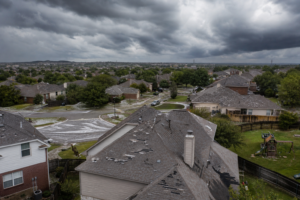
Some of these signs call for a repair. Some indicate replacement is coming. Some, like sagging, need immediate attention. The only way to know for certain is a professional inspection that gets eyes on the actual condition of the roof surface, flashing, gutters, ventilation, and decking.
Divided Sky offers free roof inspections throughout Central Texas — San Marcos, Kyle, Buda, New Braunfels, Wimberley, Dripping Springs, Round Rock, and beyond. You’ll get an honest written report and a clear answer about what your roof actually needs. Schedule yours here.
